
Kitchen Cabinet Quote Comparison
Compare Dallas kitchen accessory allowances with itemized intended goods, stable core units, compatibility questions, seller terms, and quote assumptions.
Bring your project details together before considering a cabinet purchase.
Send my cabinet inquiry
Or call (562) 203-3232. Calls only, we do not receive text messages.
Some cabinet choices can stay provisional while others affect several parts of the purchase at once. Dallas Cabinet Studio organizes six guides around those dependencies, so a Dallas buyer can decide which question needs resolving before the next commitment. The exercise is to distinguish a preference still under discussion from a change that requires another quote, fit check, or receiving plan.
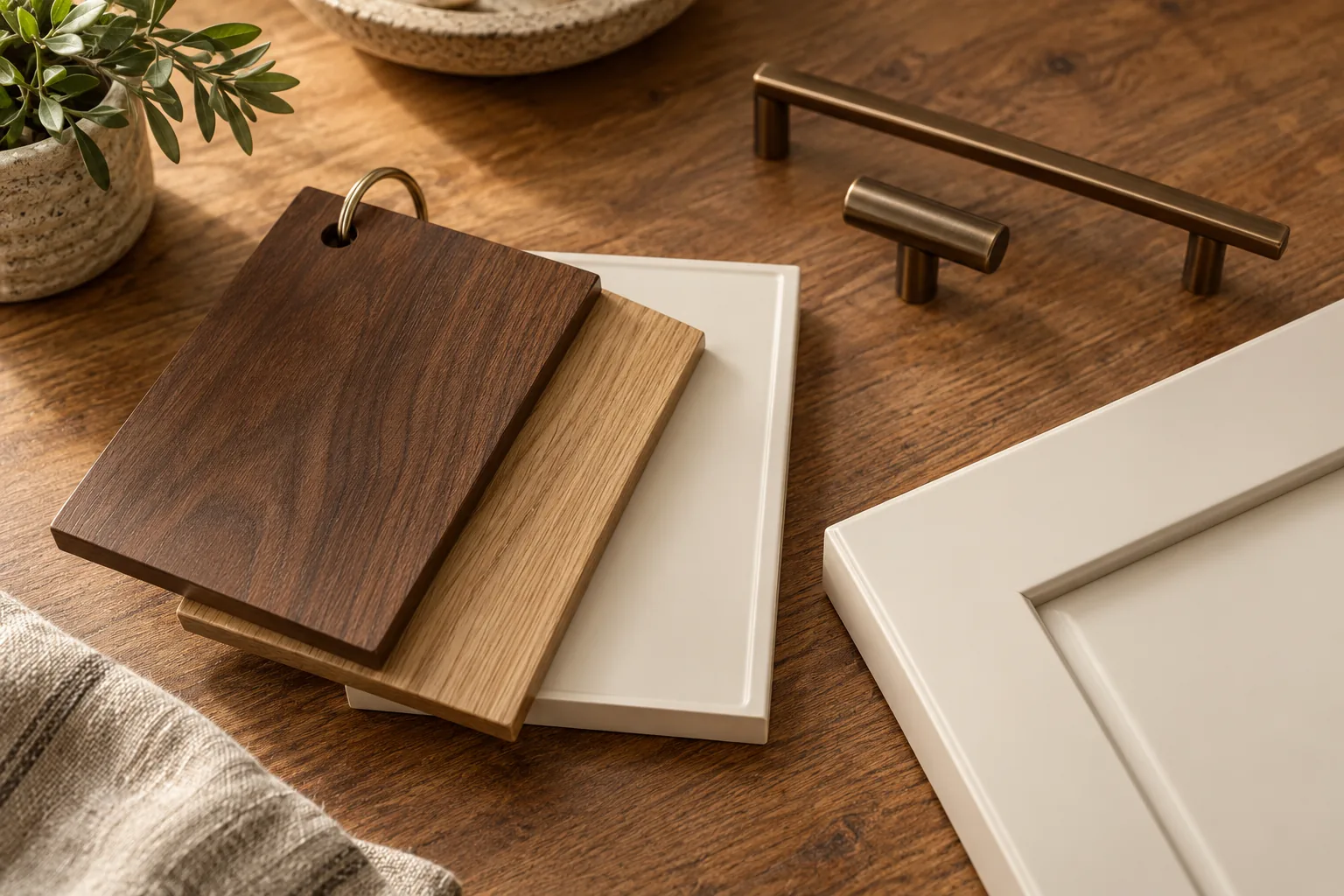
The guide directory supplies buying information and does not establish the availability of measuring, assembly, plumbing, or installation work. The owner records inquiries for review. Actual product and service commitments require acceptance by the relevant party; a possible contact sharing also requires permission. Use the articles to make those dependencies visible rather than assume they have been handled.
About Dallas Cabinet Studio
Independent cabinet buying information and quote-request service. We do not manufacture, stock or install cabinets. A referral, supplier response, appointment or purchase is not guaranteed. Product availability, delivery and installation must be confirmed directly with the seller or separately engaged contractor.
Every service
Compare Dallas kitchen accessory allowances with itemized intended goods, stable core units, compatibility questions, seller terms, and quote assumptions.
Reconcile two Dallas cabinet sketches by tracing opening references, room observations, changed products, operation checks, and the purchasing version.
Prepare a Dallas mixed RTA and assembled request with actual group availability, product documents, task boundaries, shipment identity, and estimates.
Prepare a Dallas exposed-side vanity request with a complete component list, room observations, plumbing questions, accepted work, and written scope.
Control repeated Dallas vanity orders with separate room cards, component differences, revision approval, shipment references, and package estimates.
Plan a Dallas partial cabinet shipment with accepted phase contents, receiver handoffs, cumulative goods records, actual reporting terms, and charges.
A buyer can discuss several finish ideas before choosing, but an order needs the actual selected reference. A retained appliance model can constrain unit selection even while the front preference is undecided. Identify which choices affect other parts of the arrangement and which can remain labeled as alternatives during early discussion.
The hypothetical reader has a preferred appearance and an unsettled appliance. The useful next step may be obtaining the appliance information rather than requesting another price for a different color. That prioritization is an editorial exercise, not a rule about every Dallas purchase. The actual dependencies decide what needs attention first.
The six guides produce records that preserve those states. A comparison list, room record, task map, component list, room schedule, and receiving plan serve different purposes. A choice should move into the accepted purchasing version only when its relevant questions are understood by the parties relying on it.
The kitchen guide examines a bundled accessory allowance against an identifiable set of supplied pieces. It helps a buyer ask what an amount actually covers before treating it as equivalent to another offer. Optional selections can remain alternatives while required pieces need clear identification in the base request.
The layout guide considers two inconsistent room sketches prepared at different stages. It asks how to trace discrepancies back to their measurement references and current products. A priced drawing does not establish which sketch is correct. The party verifying the purchasing plan needs the actual source and status of its dimensions.
Use both records if the product list depends on an unresolved room fact. Keep the affected lines provisional rather than request a final amount based on incompatible sketches. A clear open item can prevent an early discussion from being mistaken for an order instruction before anyone has resolved the discrepancy.

The RTA guide examines a proposed order mixing assembled and unassembled goods. It asks whether that combination is actually offered and what tasks and shipment assumptions belong to each group. A buyer's preference for a mixture does not establish seller availability or a universal quality hierarchy.
The vanity guide follows a cabinet with one exposed side and asks how the intended complete combination is supplied. A visible-side treatment, top, basin, and related plumbing questions can affect the selected unit. A front-view photograph does not identify every piece or task needed for that arrangement.
These guides help keep product dependencies explicit. Ask what changes if a format, top, or side piece moves to another option. Approval of one identified combination should not transfer silently to a different one. The owner reviewing a question does not certify assembly, compatibility, or any professional work.
The package guide concerns repeated vanity orders that look similar but need distinct room identities. It shows why a shared product code is not enough to control revisions or receipt. The buyer should know which quantities and finishing details belong to each room before authorizing the schedule.
The delivery guide focuses on a proposed partial shipment and the information needed to distinguish an agreed phase from an unexpected shortfall. Shipment contents, receiver contacts, and reporting procedures come from the actual seller. A guide cannot promise split delivery or prescribe a universal claim deadline.
If another person will receive the goods, give them the current accepted references rather than an early comparison sheet. Keep their authority and handling tasks explicit. Availability to be present is a different commitment from approving a substitute or carrying the goods beyond the seller's service boundary.

No observed Dallas prices for these guide topics are supplied. Ask the seller to identify which choices its estimate relies on and which lines are provisional. A changed dependency may require another version, while a preference still open should remain visible. An undated amount cannot explain what choices it covers.
Request clearly described alternatives where offered. Preserve stable assumptions when evaluating a specific choice, and list all differences when several move together. Identify independently arranged work and unresolved charges. A guide title does not establish that an unquoted task is included, available, or costless.
Dependency-sensitive estimates are subject to change as the actual selections and responsibilities are accepted; the seller's written quote establishes its current goods, scope, and amount. Separate professional work needs documented terms from its provider. The Studio cannot preserve a rate or guarantee that a provisional option can become an order.
Paulding's supplied planning record coordinates Dallas, Hiram, and Braswell, while New Hope remains a differently qualified locality pending address confirmation. Those distinctions identify context without giving property conditions or coverage. Keep the actual project locality accurate when selecting a buying exercise.
The FTC estimate guidance supports preserving scope, materials, timing, and price. Apply it when a dependent choice changes, so the new offer is readable. The reference does not vet a seller or establish its affiliation with this publication.
Send the owner the dependency question and current record, with relevant facts and preferred timing. The inquiry is reviewed rather than automatically assigned to a provider. Permission and separate recipient acceptance govern any possible sharing. Actual goods and work must be established through the parties willing to accept the proposed transaction.
Inquiry process
Sending an inquiry does not reserve products or book work.
Include project ZIP, room, approximate cabinet list and preferred timing.
Identify assembly, access, measurements and any separately arranged labor.
An inquiry can be referred only if a suitable seller accepts the location and product request.
Confirm the final drawing, itemized price, payment, delivery and return terms directly before ordering.
Questions
Identify what the amount depends on. An appliance, room discrepancy, or required component can affect the product list, while a preference may remain an alternate. Use the guide addressing that dependency so sellers do not price incompatible assumptions as if they described one final order.
Yes, label the desired combination and ask whether the seller actually offers it. Identify tasks and shipment assumptions for each group. Do not rely on mixed availability or assembly help until the relevant party accepts the intended scope.
It organizes room identities and repeated units without establishing a trade account or discount. Ask the actual seller what terms apply to the named purchaser and quantity. The publication's method does not make a commercial program available.
Describe the precise unresolved dependency, current products or drawing, project locality, and available evidence. A guide selection alone cannot identify the issue. The owner reviews the record, while a potential handoff requires permission and independent willingness.
Describe the purchase and project ZIP in Dallas. Supplier acceptance and any referral are confirmed separately; no visit or quote is booked by this form.
Calls only, we do not receive text messages.